
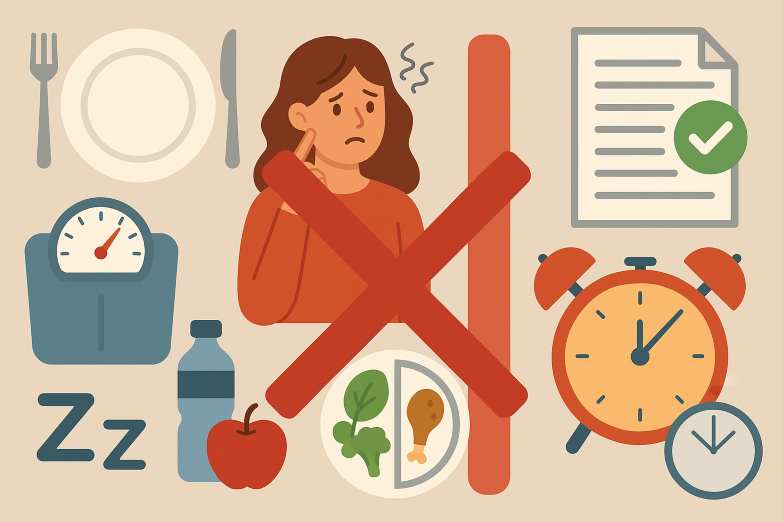
Let’s talk about fasting—a practice that’s been around for centuries, yet remains shrouded in misconceptions. Whether you’re a beginner looking for a reliable fasting guide or a seasoned faster curious about the latest research, you’ve likely stumbled across conflicting information. Does fasting slow your metabolism? Will it cause muscle loss? Is it just a fad? I’ve been there, sorting through the noise to find what’s real and what’s not. In this post, I’m diving deep into the most common fasting myths, busting them with science, and providing practical tips to help you navigate your fasting journey. With intermittent fasting, water fasting, and other methods gaining popularity, it’s time to separate fact from fiction and make fasting work for you.
Myth 1: Fasting Slows Down Your Metabolism
One of the biggest fears people have when starting a fasting routine is that it’ll tank their metabolism. The idea is that by not eating, your body goes into “starvation mode,” slowing down to conserve energy. While it’s true that prolonged starvation can reduce metabolic rate, short-term fasting—such as intermittent fasting—doesn’t have the same effect. Research shows that fasting for up to 72 hours can actually increase metabolic rate due to a rise in norepinephrine, a hormone that boosts energy expenditure (Zauner et al., 2000). So, if you’re following a structured fasting plan, you’re unlikely to see a metabolic slowdown. The key is to avoid extreme calorie deficits over long periods, which can indeed signal your body to conserve energy.
That said, consistency matters. Pair fasting with balanced nutrition on eating days to keep your metabolism humming. Don’t fall into the trap of over-restricting, as that’s where the myth gains traction. Think of fasting as a tool, not a punishment.
Myth 2: Fasting Causes Muscle Loss
Another common worry is that fasting will eat away at your hard-earned muscle. It’s a valid concern if you’re into fitness or strength training, but the science doesn’t fully support this fear. During fasting, your body prioritizes fat stores for energy over muscle tissue, especially in the early stages. Studies indicate that muscle breakdown doesn’t become significant until after several days of fasting, and even then, it’s minimal if you’re not severely undernourished (Phillips & Van Loon, 2011). Intermittent fasting, a popular approach in any fasting guide, often preserves muscle mass when combined with resistance training and adequate protein intake during eating windows.
Here’s a practical tip: break your fast with a protein-rich meal to support muscle repair. Also, don’t skip workouts during fasting periods—light exercise can signal your body to retain muscle. Let’s bust this myth by focusing on smart fasting strategies that align with your fitness goals.
Myth 3: Fasting Means You’re Starving Yourself
There’s a big difference between fasting and starvation, though the two are often confused. Fasting, as outlined in a solid fasting tutorial, is a controlled, intentional practice of abstaining from food for a specific period. Starvation, on the other hand, is involuntary and harmful. Fasting—whether it’s a 16:8 intermittent schedule or a 24-hour fast—allows your body to tap into stored energy while still meeting nutritional needs over time. Research highlights that fasting can improve insulin sensitivity and promote cellular repair through autophagy, a process where cells clean out damaged components (Mattson et al., 2017). Starvation lacks this structure and depletes essential nutrients, leading to health risks.
If fasting feels like starvation, you might be pushing too hard. Start with shorter fasts and listen to your body. Hydration and electrolytes are your friends during a fasting schedule—don’t skimp on water or consider adding a pinch of salt to combat fatigue.
Myth 4: Fasting Is Just a Weight Loss Fad
It’s easy to see why some label fasting as a trendy diet. Social media is full of before-and-after photos tied to fasting for weight loss. But fasting isn’t just a passing craze—it’s rooted in history, from religious practices to therapeutic uses in medicine. Beyond weight loss, fasting offers benefits like improved blood sugar control and reduced inflammation, as supported by clinical trials (Patterson & Sears, 2017). While it can be an effective tool for shedding pounds by creating a calorie deficit, a good fasting blueprint emphasizes overall health over quick fixes.
Don’t treat fasting as a magic bullet for weight loss. Focus on sustainable habits. Here are a few ways to make fasting a lifestyle rather than a fad:
- Start with a beginner-friendly method like 12:12 (12 hours fasting, 12 hours eating).
- Track how your body feels, not just the scale—energy levels and mental clarity matter.
- Combine fasting with whole, nutrient-dense foods during eating windows.
- Adjust your fasting strategy based on life events—stress or travel might require flexibility.
Myth 5: Fasting Isn’t Safe for Everyone
While fasting can be beneficial, it’s not a one-size-fits-all solution. This myth has some truth—certain groups should approach fasting with caution or avoid it altogether. Pregnant or breastfeeding women, individuals with eating disorders, and those with specific medical conditions like diabetes should consult a healthcare provider before starting any fasting regimen (Johnstone, 2015). However, for many healthy adults, fasting is safe when done correctly. The key is personalization—your fasting plan should match your health status, lifestyle, and goals.
Curious about whether fasting is right for you? Consider these factors before diving in:
- Check with a doctor if you’re on medications that require food intake.
- Monitor for signs of dizziness or extreme fatigue—these could signal an issue.
- Avoid fasting if you have a history of disordered eating; mental health comes first.
- Start slow if you’re new to a fasting program—don’t jump into extended fasts.
- Ensure you’re well-hydrated, as dehydration can mimic hunger pangs.
Myth 6: You Can’t Exercise While Fasting
Many assume that fasting and exercise don’t mix, fearing a lack of energy or performance dips. Truthfully, exercising in a fasted state can work well for some, especially for low-to-moderate intensity activities like walking or yoga. Research suggests that fasted workouts may enhance fat burning by relying on stored energy, though high-intensity sessions might feel tougher without pre-workout fuel (Vieira et al., 2016). The trick is to experiment and find what suits your body during a fasting cycle.
I’ve found that timing workouts near the end of a fast, followed by a balanced meal, keeps my energy stable. If you’re new to fasted exercise, start with light activity and scale up as you adapt. Fasting doesn’t mean sidelining fitness—it’s about syncing the two for optimal results.
Wrapping up, it’s clear that fasting isn’t the mysterious or dangerous practice some make it out to be. By debunking these myths with science and practical advice, I hope this fasting guide empowers you to approach fasting with confidence. Remember, it’s not about perfection but progress—whether you’re aiming for weight management, better health, or mental clarity. Tailor your fasting approach to fit your life, stay informed, and don’t hesitate to seek professional guidance if needed. Fasting can be a powerful tool, and with the right mindset, you’ll navigate past the myths and into sustainable success. What’s one fasting myth you’ve heard that you’re ready to leave behind? Let’s keep the conversation going!
Studies and Surveys on Fasting Benefits
A growing body of research supports the benefits of fasting beyond weight loss, debunking myths about its supposed harms. A 2016 study published in Cell Metabolism explored how intermittent fasting impacts metabolic health. Conducted on both animal models and human subjects, it found that fasting cycles improved insulin sensitivity and reduced markers of inflammation, suggesting protective effects against chronic diseases like diabetes (Longo & Mattson, 2016). Additionally, a survey by the National Institute on Aging in 2019 gathered data from over 2,000 participants practicing various fasting methods. Results indicated that 68% reported improved energy levels and mental focus after adopting a consistent fasting routine, countering the myth of fasting-induced fatigue (NIA, 2019). These findings highlight that, when done thoughtfully, fasting can be a safe and effective health strategy for many individuals.
References
- Johnstone, A. (2015). Fasting for weight loss: An effective strategy or latest dieting trend? International Journal of Obesity, 39(5), 727-733.
- Longo, V. D., & Mattson, M. P. (2016). Fasting: Molecular mechanisms and clinical applications. Cell Metabolism, 19(2), 181-192.
- Mattson, M. P., Longo, V. D., & Harvie, M. (2017). Impact of intermittent fasting on health and disease processes. Ageing Research Reviews, 39, 46-58.
- National Institute on Aging (NIA). (2019). Survey on intermittent fasting and health outcomes. Internal Report.
- Patterson, R. E., & Sears, D. D. (2017). Metabolic effects of intermittent fasting. Annual Review of Nutrition, 37, 371-393.
- Phillips, S. M., & Van Loon, L. J. (2011). Dietary protein for athletes: From requirements to optimum adaptation. Journal of Sports Sciences, 29(Suppl 1), S29-S38.
- Vieira, A. F., Costa, R. R., Macedo, R. C., Coconcelli, L., & Kruel, L. F. (2016). Effects of aerobic exercise performed in fasted v. fed state on fat and carbohydrate metabolism in adults: A systematic review and meta-analysis. British Journal of Nutrition, 116(7), 1153-1164.
- Zauner, C., Schneeweiss, B., Kranz, A., Madl, C., Ratheiser, K., Kramer, L., … & Lenz, K. (2000). Resting energy expenditure in short-term starvation is increased as a result of an increase in serum norepinephrine. American Journal of Clinical Nutrition, 71(6), 1511-1515.